
March was less about big announcements, and more about shifts that quietly change how accounts are managed. From tighter cost structures to earlier planning requirements for Prime Day and deeper AI integration across search and data tools, the direction is becoming clearer.
Below are the key updates and what they actually mean for day-to-day management.
Advertising & Marketing:
1. Prime Day 2026 – Key Updates
Earlier this week, Amazon released additional details for Prime Day 2026.
Deals must now meet stricter pricing rules (based on lowest prices in the past 30–60 days), and the current fee structure includes a $100 upfront fee plus a 1.5% variable fee on sales.
Inventory deadlines are also earlier, with shipments required by late May to early June depending on the setup.
Overall, pricing, deal planning, and inventory need to be aligned earlier to avoid last-minute limitations and ensure full eligibility.
Amazon’s Big Spring Sale took place across different dates depending on the region (late March in the US, with variations across Europe and Australia).
Unlike Prime Day, this event is open to all customers, with a strong focus on seasonal categories like home, fashion, outdoor, and tech.
Beyond the short-term sales lift, this event mainly serves as a testing window. It allows brands to evaluate pricing, conversion, and creative performance ahead of Prime Day, and make adjustments based on real data rather than assumptions.
3. AI Prompts in Sponsored Ads
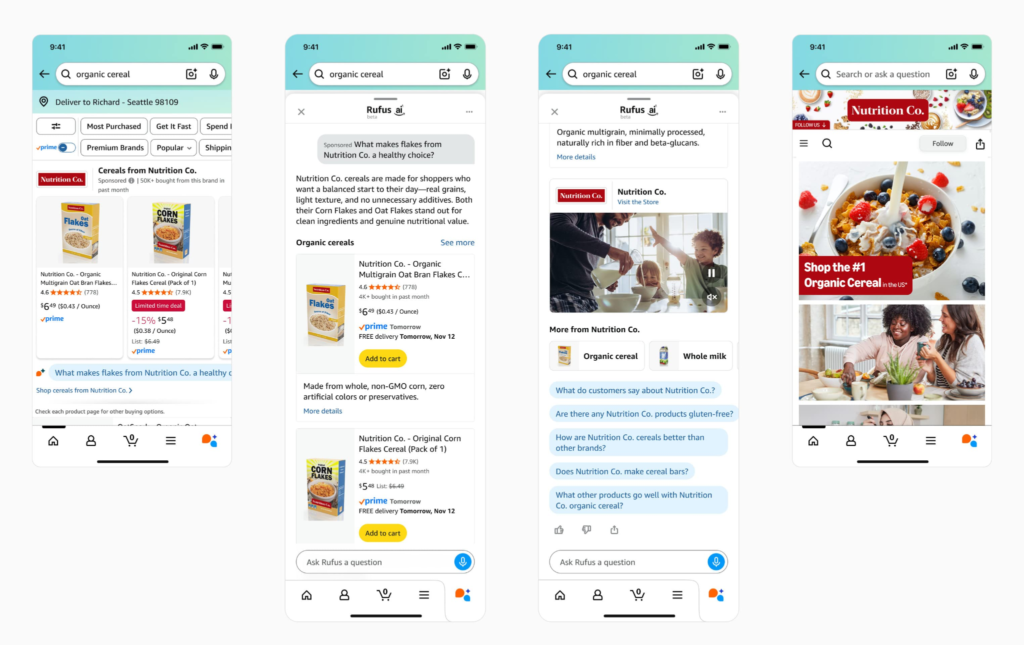
Amazon expanded AI-powered prompts within Sponsored Products and Sponsored Brands, now available to all advertisers (moving from open beta to general availability in the U.S). These prompts appear within the shopping journey and are generated based on product pages, brand content, and campaign data.
This doesn’t replace campaign setup, but it does change how ads show up and how customers interact with them. Over time, this is likely to increase competition and CPCs, as more placements become available. For brands, it becomes more important to have clear, structured listings that the AI can easily use and surface.
Operations:
1. Digital Services Tax (DST) – Europe
Starting March 20, 2026, Amazon began applying an updated Digital Services Tax (DST) across France, Italy, and Spain. The tax applies to sellers established outside these countries and is added on top of referral and FBA fees (typically around 3%).
This is an additional tax layer that directly increases operating costs in these marketplaces. For brands selling Pan-EU, this requires a clear review of margins and pricing per country to make sure profitability is not affected.
2. Removal & Disposal Fees – Billing Change
Starting March 1, 2026, Amazon changed how removal and disposal fees are charged. Instead of delayed or aggregated billing, fees are now charged per unit immediately when the action is completed.
The cost itself hasn’t changed, but the timing has. For brands that remove inventory in bulk, this creates a more immediate impact on cash flow and requires better planning around when these actions are executed.
AI Updates:
1. AI Agents Policy Update (BSA)
Amazon updated its Business Solutions Agreement (BSA), effective March 4, 2026, introducing a new Agent Policy for AI tools and automation.
Tools must identify themselves, comply with Amazon’s requirements, and stop access if requested. Amazon also reserves the right to restrict non-compliant tools.
Sellers that create / connect AI agents and tools should review all connected tools and make sure they follow Amazon’s policies to avoid potential disruptions.
2. Sellers Canvas – AI Workspace in Seller Central
Amazon introduced “Sellers Canvas” in early March 2026, a new AI workspace that allows sellers to interact directly with their data instead of working with static reports.
Instead of manually downloading and analyzing reports, the system generates real-time visual dashboards and answers questions based on business data.
This can significantly reduce analysis time and make decision-making faster. Sellers can analyse different scenarios (for example, changes in CPC or pricing) and get immediate visual insights.
Currently, the feature is available within the “New Seller Central” experience and is rolling out gradually.

3. “Customers Ask” Module in Search Results
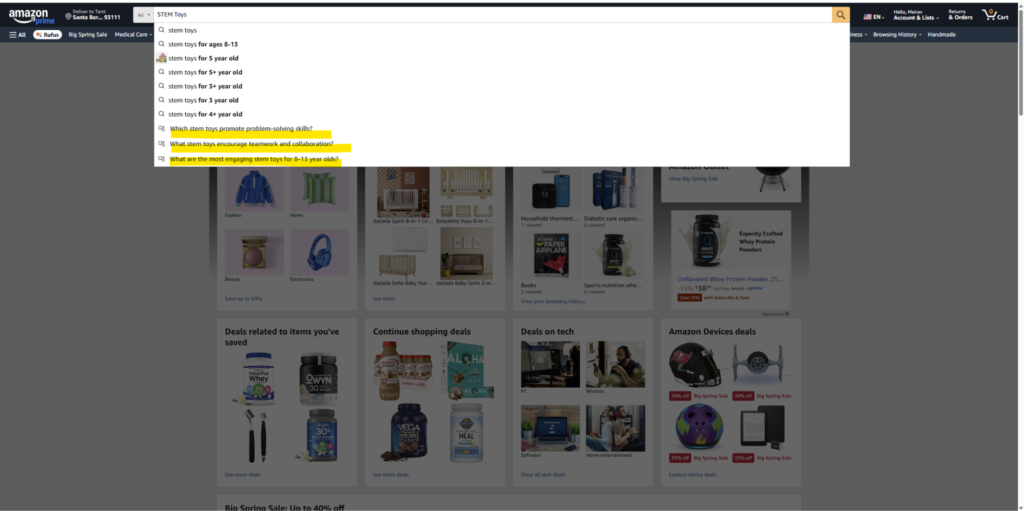
Amazon is introducing a new “Customers Ask” module within search results. This module shows common questions customers ask Rufus, along with AI-generated summaries and a related product carousel.
For example, when searching for “STEM toys”, I got questions like “What are the most engaging STEM toys for 8–13 year olds?” directly as part of the search results.
This reflects a shift in how products are discovered. Customer questions, reviews, and Q&A content are now directly influencing what Amazon surfaces in search.
For brands, this increases the importance of actively managing listing content beyond the basics. Reviews and Q&A are no longer just social proof, they are becoming a key input for how AI recommends products.
==============================
The Bottom Line: Most of these changes are not dramatic on their own, but together they point in a clear direction.
Costs are becoming more immediate and harder to ignore, while AI is gradually shaping both how customers search and how decisions are made.
The impact builds over time, and requires earlier planning, clearer data, and more structured execution.
As always, we are here to help you navigate these changes and stay ahead of the curve.
Regards,
Meirav